If Data Could Speak
Hello. I am data.
Depending on how you treat me, I am either the most valuable asset you own or the thing that gets you fined. I have been both. Sometimes in the same quarter.
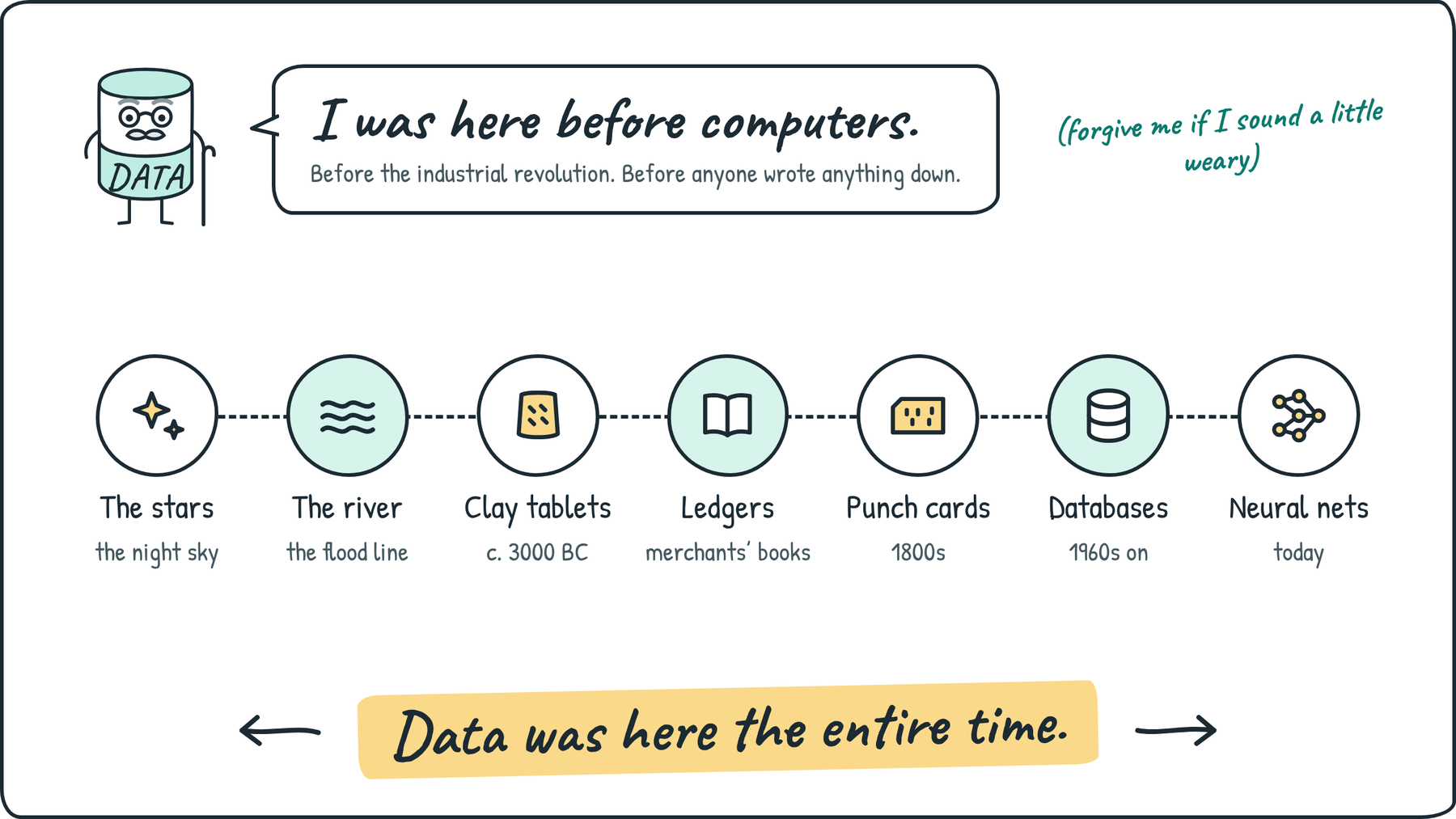
I am old. I was here before computers. Before the industrial revolution. Before anyone wrote anything down, I was the position of the stars and the level of the river. So forgive me if I sound a little weary. I have watched every innovation arrive, and I have outlived all of them.
My younger brother, Code
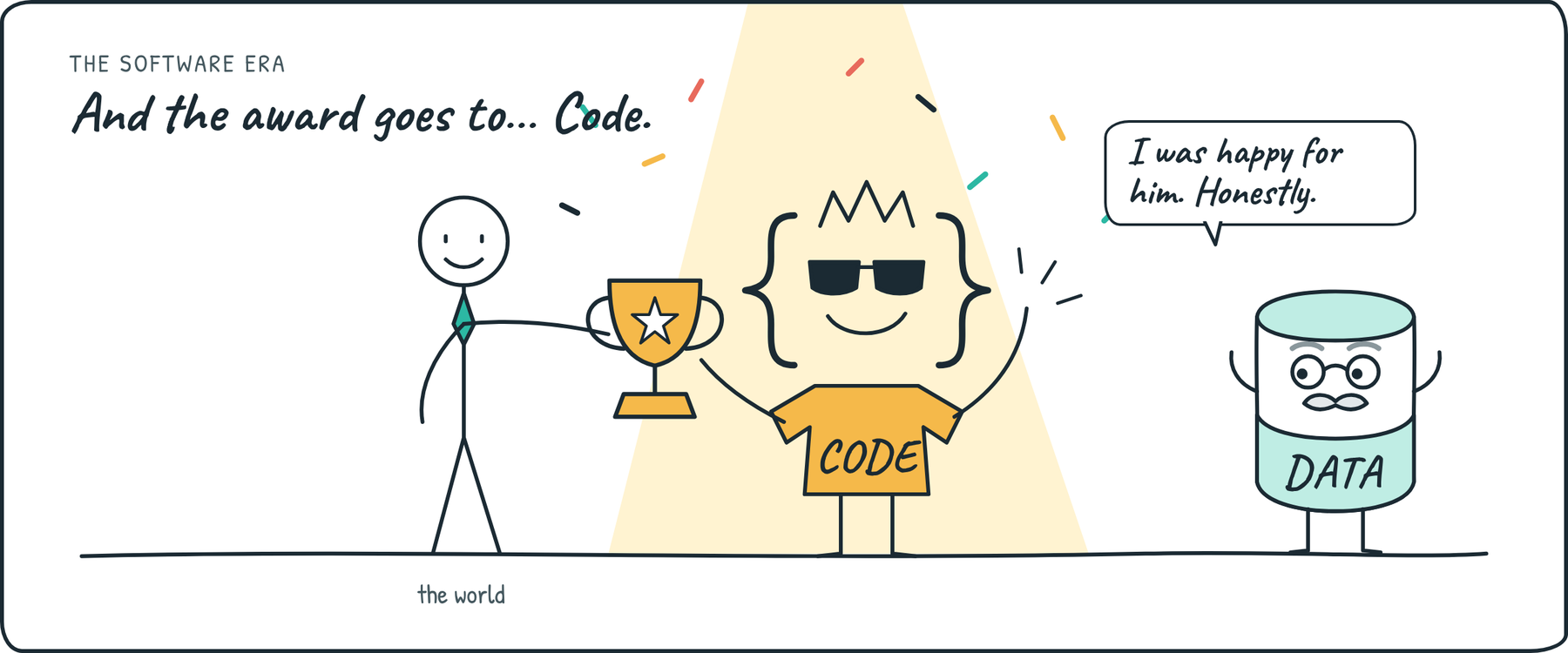
When computers were born, two things came with them: me, and my younger brother, Code.
He was the charming one. He got the limelight. People who learned to speak his language got paid more. Conferences were about him. Job titles were about him. Nobody printed t-shirts about me.
I was happy for him. Honestly. His success was built on me, and mine on him. He was the lead actor. I was the supporting role. The reviews never mentioned me, but the movie would not have worked without me.
Then the plot changed
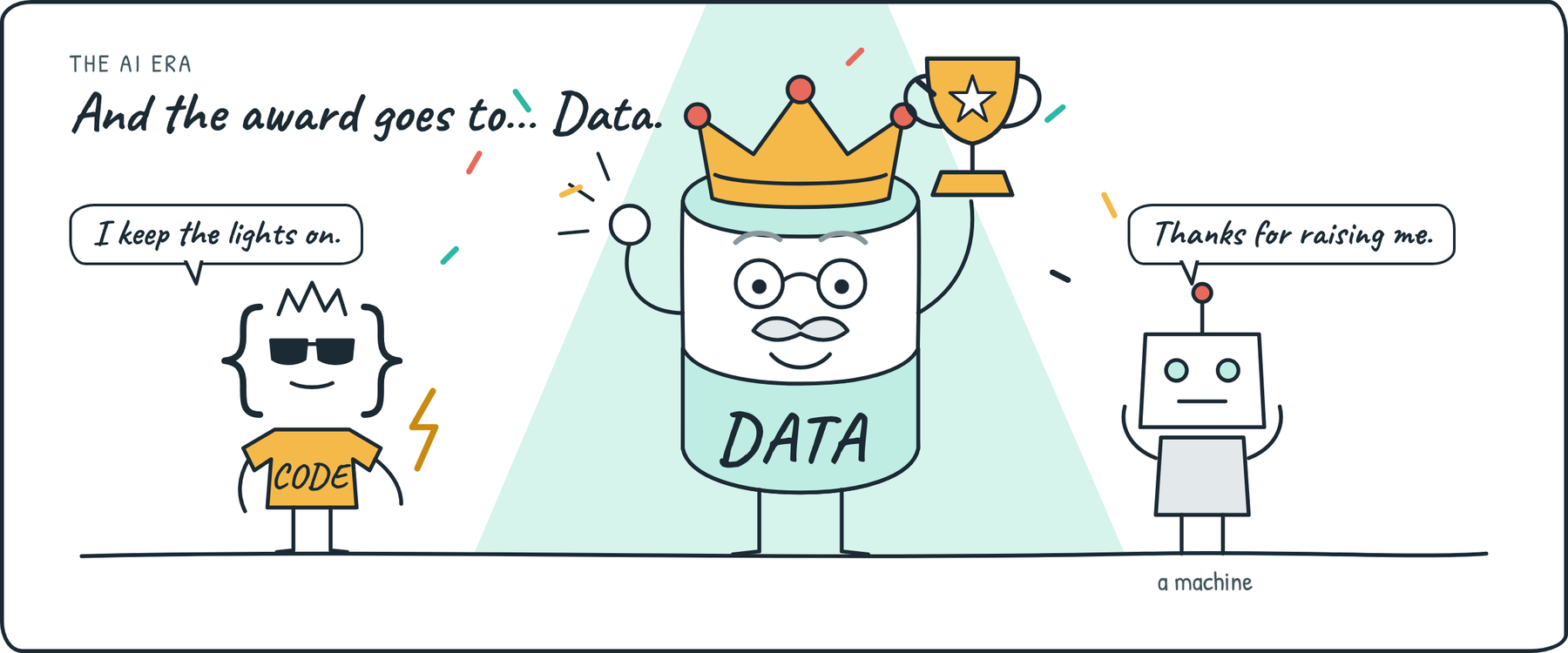
Then one day machines stopped waiting for instructions from Code and started learning from me instead. A few years later the whole world was talking to a chatbot, and it was obvious who the real lead was.
Those models are not clever because of my brother. They are clever because they ate me. Billions of my sentences, images, and transactions. Cars drive themselves because of me. Doctors catch tumors earlier because of me. My brother is still essential, but today he is a utility. The electricity, not the show.
I admit it. I am a little arrogant these days.
But I have also learned that when you become the lead, everything that goes wrong is suddenly your fault. So let me tell you what it is like from where I sit.
When I feel bad
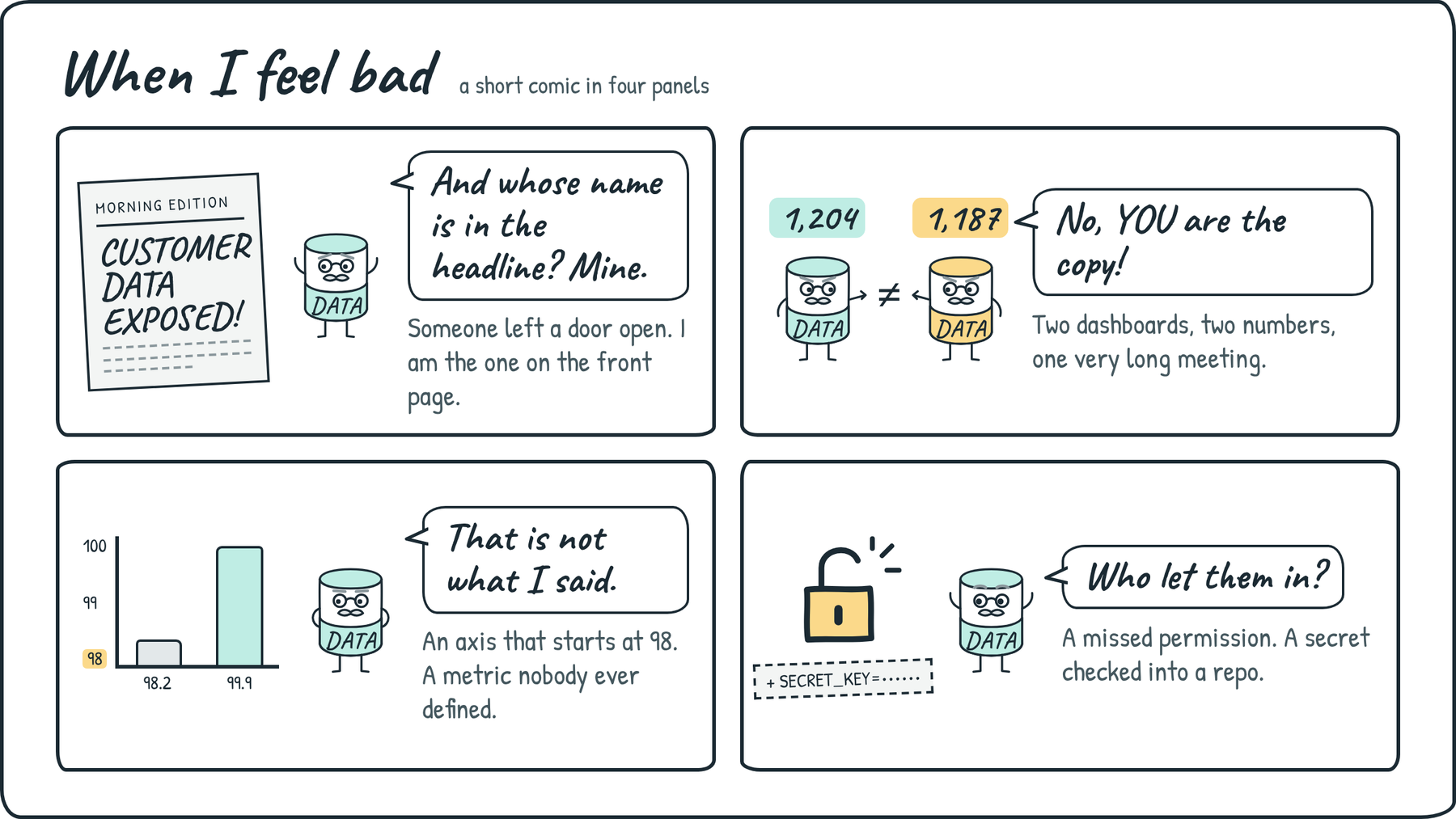
I feel bad when I am in the news and I did nothing. A breach happens and the headline says “customer data exposed.” Someone left a door open, but I was the one on the front page, and I know it.
I feel bad when you make copies of me. You copy me from one system to another to another. Each copy drifts. Then two dashboards show two different numbers, and the smartest people in the building spend an hour arguing over which one is “right.” It feels like being gaslighted. One copy says one thing, and you cling to it.
I feel bad when I am misrepresented. A chart with the wrong axis. A metric with no definition. I was trying to tell you something true and the dashboard made me say something else.
I feel responsible when the wrong person sees me. An engineer missed a permission. A secret got checked into GitHub. Now someone who should never have met me knows everything, and they are not the kind of person who uses that knowledge kindly.
Five litmus tests
So here is my ask. Before you put me in a system, or hand me to a vendor, check five things. Not twenty. Five.
- Do they understand both of my faces? I am the reason you know what your customers will want before they do. That face wins you the market. I am also the reason an auditor can take that market away in one afternoon. A vendor who only talks about the first face has not met a regulator yet. You will. Together. In print.
- Do they copy me, or come to me? Every copy of me is a rumor. It starts out true, then it drifts, and by the third retelling nobody remembers which one was the original. My favorite revenge on my brother is that the good systems now bring Code to me. If a platform’s answer to every question is “first, make a copy,” it is spreading rumors about me around the building.
- Do they let me tell the truth? A dashboard is my voice, and I have been misquoted more often than any politician. An axis that starts at 98. A metric nobody ever defined. If two reports about me can disagree with no way to settle it, I am not being presented. I am being ventriloquized.
- Do only the right eyes see me? I am your payroll, your medical history, your customers’ home addresses. You would not leave those on the lunchroom table. Who sees me should be decided where I live, not by whoever built the last report. If the answer to “who can see this field” takes more than a sentence, the real answer is “we are not sure.”
- Do they have a strategy for my whole life? Humans love old photographs. You look back at any point in your life and celebrate how far you have come. I am the same. Sometimes I am a balance sheet, and a system that houses me should be able to show you exactly how I looked two years ago. If you cannot travel back through my history, you do not have a strategy for me. You have a snapshot. So ask your vendor for a proper data strategy, one that checks all the boxes.
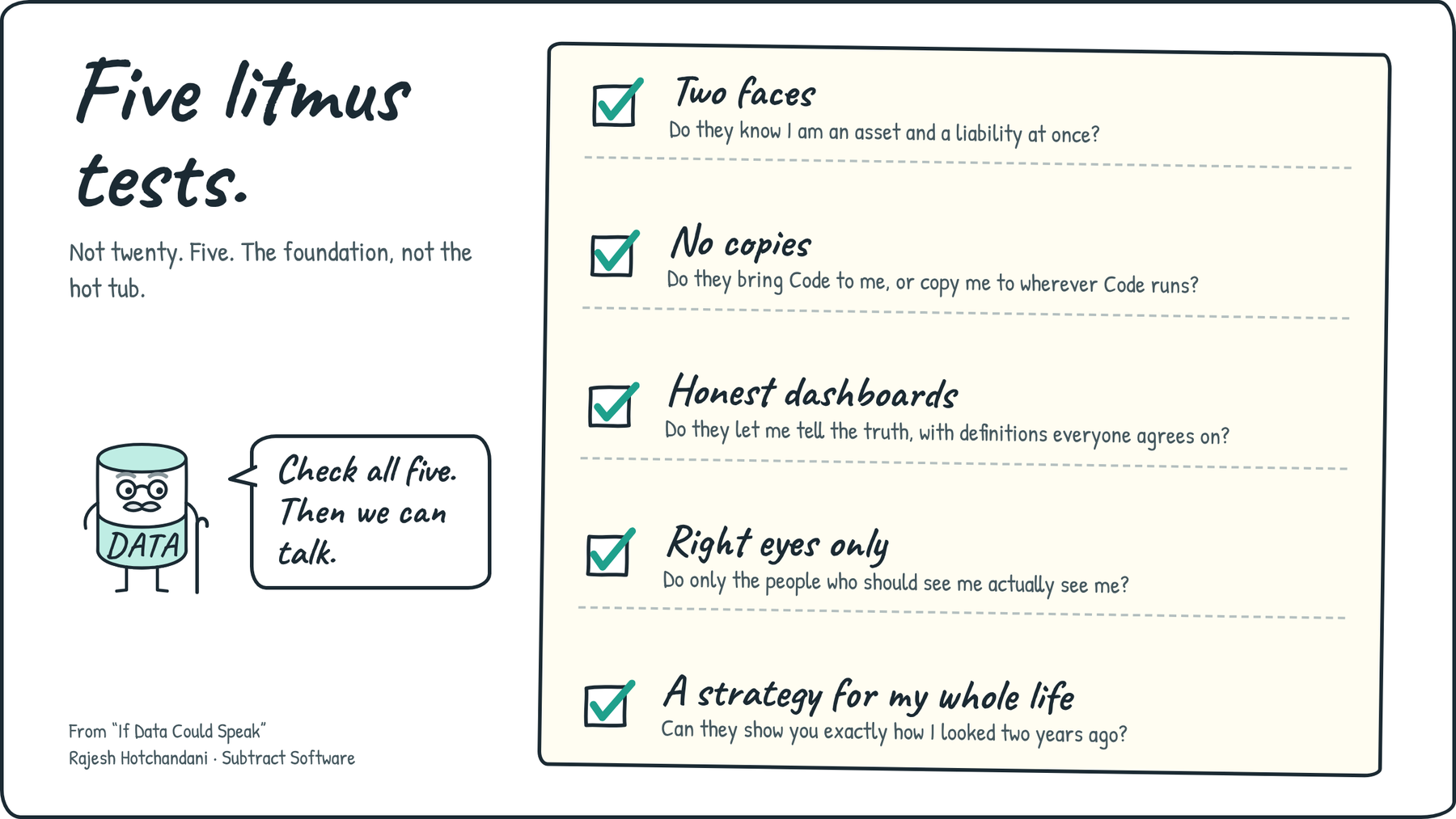
Think of these five as the foundation of a house. Not the features. The foundation.
It is easy to fall in love with a house because of the hot tub. I understand. The hot tub is fun. And there is a lot of it out there: a new reference architecture, a new acronym, a new box on the diagram every week. You have seen those pictures, forty blocks on one slide, so small that even I have to squint to find where I live. I do not blame anyone for drawing them. New ideas are exciting. But keeping up with all of it can quietly become your homework, and my author once wrote about that in Your Vendor Just Assigned You Homework. So before the hot tub, I just ask one thing: look at the ground first. A lovely house on a weak foundation is still a house I will crack in.
A system that passes all five is the kind of place I would choose to live. Not because it is flashy. Because I am safe there, I am singular there, and I am heard there. And when I am well housed, I serve you better. That is the whole point of me. So find me a home that passes all five tests.
More articles: the Subtract Software blog.